
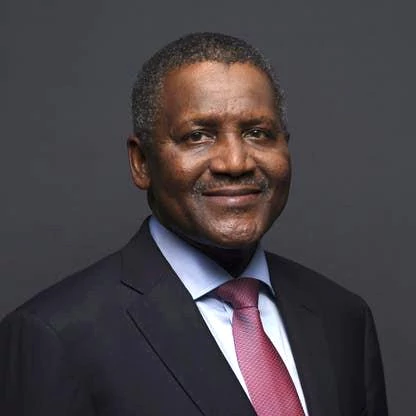
Aliko Dangote: The Remarkable Journey of Africa’s Industrial Giant
When people hear the name Aliko Dangote, they often think of wealth, cement, sugar, oil, and one of Africa’s largest business empires. But behind the billions of dollars and massive industrial facilities is a story that began with a young Nigerian entrepreneur who borrowed money from a family member and started trading basic commodities.
Today, Aliko Dangote is one of Africa’s most influential businessmen and remains the richest Black person in the world. Forbes estimated his net worth at approximately $28.5 billion in its March 2026 annual billionaires ranking, while its real-time estimate reached about $31.2 billion in August 2026. Because billionaire net worths fluctuate with stock prices and company valuations, the exact number changes frequently.
At 69 years old, Dangote’s journey represents much more than personal wealth. It is a story about entrepreneurship, risk-taking, patience, manufacturing, and the ambition to build businesses capable of serving an entire continent.
Early Life in Kano, Nigeria
Aliko Mohammad Dangote was born on April 10, 1957, in Kano, Nigeria, a major commercial center in northern Nigeria. He was born into a prominent family with a long history in commerce and trading. His grandfather, Sanusi Dantata, was an influential businessman, while his great-grandfather, Alhassan Dantata, had been one of the most successful traders in West Africa.
Growing up around people involved in business gave Dangote an early exposure to commerce. However, he did not simply inherit the business empire he has today. His own entrepreneurial instincts appeared at a remarkably young age.
Dangote has recalled that while he was still in school, he would purchase boxes of sweets and sell them to other students. Rather than simply spending the money he made, he kept the profits. That childhood experience may seem small compared with the enormous businesses he would eventually build, but it demonstrated something that would become central to his career: understanding that money could be used to create more money.
After completing his early education in Kano, Dangote traveled to Egypt, where he attended Al-Azhar University in Cairo and studied business. He eventually returned to Nigeria and began pursuing his own business ambitions.
The Beginning: A Small Loan and a Big Ambition
Dangote’s professional business career began in the late 1970s. Sources differ slightly on whether the formal beginning was 1977 or 1978, but the important point is that he entered the business world in his early twenties.
He received a relatively small loan—commonly reported at roughly $3,000 at the time—from his uncle to start trading. He began dealing in commodities such as rice, sugar, and cement. Dangote recognized that Nigeria had a large and growing population with enormous demand for basic products.
This was a crucial lesson in his business philosophy. Instead of selling luxury products to a small number of wealthy customers, Dangote focused on products millions of ordinary people needed.
He eventually moved his operations to Lagos, Nigeria’s commercial capital. There, his trading business began expanding. He imported commodities and sold them in the Nigerian market, building profits and reinvesting them in the company.
The small trading operation would eventually evolve into what became the Dangote Group, one of the largest conglomerates in West Africa.
From Trading to Manufacturing
One of the most important decisions in Dangote’s career was recognizing that simply importing goods was not enough.
For years, his companies participated heavily in trading and importing. But Dangote eventually began moving toward manufacturing. His philosophy was straightforward: instead of continuing to import products Nigeria needed, why not manufacture them locally?
That strategy would completely transform his business.
The Dangote Group expanded into areas including sugar, flour, salt, cement, food processing, logistics, fertilizer, and eventually petroleum refining. The company now operates and invests across numerous African countries. Dangote’s own company describes the group as the largest conglomerate in West Africa and says it has a presence in 17 African countries.
Perhaps the biggest success story within the empire has been Dangote Cement.
Dangote invested heavily in cement manufacturing because he saw the enormous need for construction throughout Africa. As cities expanded and governments invested in roads, housing, and infrastructure, the demand for cement continued to rise.
Dangote Cement eventually became Africa’s largest cement producer, with operations in multiple African countries. Forbes reports that Dangote owns approximately 85% of publicly traded Dangote Cement through a holding company.
A Major Distinction: Dangote Group and the Stock Market
An important distinction matters when discussing the company’s stock-market status.
Dangote Group itself is a privately held company. It is not a single publicly traded corporation whose shares anyone can buy.
However, several companies within the Dangote Group are publicly traded. The group’s investor-relations information identifies Dangote Cement, Dangote Sugar Refinery, and NASCON Allied Industries as listed companies in Nigeria. Dangote Cement trades on the Nigerian Exchange under the ticker DANGCEM.
There has also been significant recent attention surrounding a potential London Stock Exchange listing for Dangote Cement. Reports in 2026 said Dangote was planning or considering a secondary London listing, potentially as early as September 2026. As of August 20, 2026, however, this should be described as a planned or proposed London listing—not as an already completed listing.
This distinction is important for anyone writing about Dangote from an investment or financial-literacy perspective.
The $20 Billion Refinery Gamble
Perhaps the most dramatic chapter in Dangote’s career has been his decision to build a massive oil refinery near Lagos.
Nigeria is one of the world’s major oil-producing countries, yet for years it depended heavily on imported refined petroleum products. Dangote believed Nigeria should be able to refine more of its own crude oil and eventually become a major exporter of refined petroleum products.
The answer was the Dangote Petroleum Refinery, a gigantic industrial project near Lagos.
The project ultimately represented an investment of roughly $20 billion and took many years to complete. Construction involved enormous logistical and engineering challenges, including building infrastructure on difficult terrain and facilities on an unprecedented scale. The refinery began operations in early 2024.
This was not a simple business expansion. It was one of the largest private-sector industrial projects ever undertaken in Africa.
And it came with enormous risk.
Challenge #1: The Refinery Almost Became a Financial Nightmare
The refinery is one of the clearest examples of the risks Dangote has taken.
According to Financial Times reporting, the project faced skepticism from banks and investors. Foreign banks were reluctant to finance the project, forcing Dangote to depend heavily on Nigerian lenders and cash generated by his existing businesses. During the COVID-19 period, when economic activity slowed dramatically, some banks became reluctant to extend credit. Some even feared the massive investment could threaten the wider Dangote empire.
Dangote himself has described the refinery project as one of the biggest risks of his life.
The challenge was not simply raising money. The project also faced construction delays, enormous cost pressures, difficulties obtaining crude oil, infrastructure challenges, and complicated relationships with government and other participants in Nigeria’s oil industry.
Yet Dangote continued.
The refinery ultimately became operational and has since transformed into a major part of his business empire. By 2026, the refinery had become an increasingly important source of refined petroleum products for Nigeria and international markets.
Challenge #2: Building in an Uncertain Business Environment
Another challenge Dangote faced throughout his career was operating in an environment marked by political instability, military rule, economic uncertainty, currency problems, infrastructure deficiencies, and difficult business conditions.
During the 1980s and 1990s, Nigeria went through periods of military government and significant economic turbulence. Building a large company in such an environment required more than identifying good business opportunities. It required patience and the ability to navigate changing regulations, supply chains, financing conditions, and government policies.
Dangote eventually made a major transition from being primarily a trader to becoming an industrialist. That transition required billions of dollars in capital and years of investment before many of the factories and facilities could generate substantial returns.
In other words, Dangote’s success was not created overnight. Many of his biggest achievements required years—or even decades—of investment before the payoff became visible.
The Rise of the Dangote Refinery
The refinery has now become a defining symbol of Dangote’s approach to business.
Rather than simply importing petroleum products, his strategy has been to create the infrastructure needed to manufacture them domestically and eventually export them.
The refinery is designed to process hundreds of thousands of barrels of crude oil per day and is widely described as the largest single-train refinery in the world.
In 2026, Dangote’s company was also moving toward another major financial milestone: plans for a public offering of the refinery in Nigeria. Reuters reported in August 2026 that Dangote Petroleum Refinery was preparing for a potentially massive IPO, with a target of roughly $5 billion, while the company has also discussed future expansion.
This demonstrates how Dangote’s empire continues to evolve from a privately controlled business group toward greater participation in global and African capital markets.
How Much Is Aliko Dangote Worth?
Dangote’s fortune has fluctuated significantly over the years because much of his wealth is tied to the value of companies and assets he controls.
Forbes estimated his net worth at $28.5 billion as of March 1, 2026, making him Africa’s richest person and the world’s richest Black individual. By August 2026, Forbes’ real-time estimate had risen to approximately $31.2 billion.
Therefore, saying Dangote has a fortune of “around $30 billion” is a reasonable general description, although the precise number can change from day to day.
It is also important to understand that billionaire net worth does not mean the individual has $30 billion sitting in a bank account. Much of Dangote’s wealth represents his ownership interests in businesses and other assets whose values rise and fall.
Where Does Aliko Dangote Live Today?
Although Dangote’s businesses have expanded across Africa and his name is recognized worldwide, he still lives in Lagos, Nigeria.
Forbes lists his residence as Lagos. Reporting from The Wall Street Journal has described Dangote as living in a home he built in Lagos in 1990.
Lagos is also central to his business empire. The city is home to major parts of his industrial operations and is located near the massive refinery complex that has become one of the most important projects of his career.
More Than a Billionaire
Aliko Dangote’s story is ultimately bigger than a story about becoming rich.
He started with a relatively small family loan and a commodity-trading business. He then moved from trading into manufacturing, built one of Africa’s largest cement businesses, expanded into sugar and fertilizer, and eventually took on the enormous challenge of building an oil refinery.
His journey illustrates a key principle of entrepreneurship: success often comes from identifying a basic need and finding a way to serve it at scale.
Dangote recognized that Africa needed cement. It needed sugar. It needed fertilizer. And Nigeria needed refined petroleum products.
Instead of simply complaining about these shortages, he attempted to build businesses capable of producing them.
That approach has made him one of the most important industrialists in modern African history.
The Legacy of Aliko Dangote
At 69, Aliko Dangote remains actively involved in the business empire he built. His companies employ thousands of people and operate across multiple sectors and countries.
His legacy, however, will likely be debated for years to come.
Supporters see him as a pioneering African industrialist who has demonstrated that enormous companies can be built on the continent. They point to his factories, jobs, investments, infrastructure projects and efforts to reduce dependence on imports.
Critics have raised concerns about the enormous influence Dangote’s companies have accumulated in certain Nigerian industries and about the close relationship between large businesses and government policy. Those criticisms are part of the broader debate surrounding industrial policy, competition and economic development in Nigeria.
Regardless of where one stands on those debates, it is difficult to deny the scale of what Dangote has accomplished.
The young entrepreneur who once sold sweets to classmates and later borrowed a few thousand dollars to begin trading has built an industrial empire worth billions. His journey from Kano to Lagos, from commodities to cement, and from cement to one of the world’s largest oil refineries is one of the most remarkable business stories to emerge from Africa.
Aliko Dangote’s story is ultimately one of vision, risk, patience, and scale. His greatest contribution may not be the billions of dollars attached to his name, but the example he has created of an African entrepreneur attempting to build industries that can supply an entire continent.

Purchase Your Hardcopy Today





Subscribe to Our Newsletter
Receive beneficial gems on Mental Science, Personal Growth, Financial Literacy, Book Writing, and more straight to your inbox.