
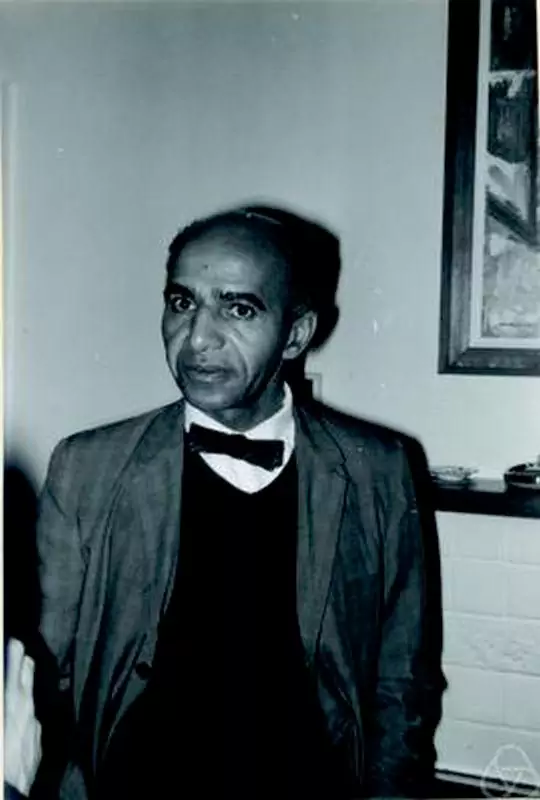
David Blackwell
David Blackwell: A Pioneer in the Mathematics Underlying Artificial Intelligence
The Life, Achievements, and Lasting Impact of a Mathematical Luminary
Introduction
David Blackwell stands as one of the most influential mathematicians of the twentieth century, whose groundbreaking work has deeply shaped both the field of mathematics and the foundations of artificial intelligence. Renowned for his contributions to probability theory, statistics, game theory, and information theory, Blackwell’s insights continue to inform modern approaches to AI. This article explores his remarkable life, academic achievements, and the mathematical concepts he developed or influenced, highlighting their relevance to artificial intelligence. Students, researchers, and general readers alike will gain a deeper appreciation for the legacy of a visionary whose work bridges abstract theory and practical application.
Early Life and Education
David H Blackwell was born on April 24, 1919, in Centralia, Illinois, a small town in the southern part of the state. Raised in a family that valued education, Blackwell displayed an early aptitude for mathematics. His childhood was marked by curiosity and perseverance, qualities that would later define his academic journey. Despite the challenges of growing up in a segregated America, Blackwell’s parents encouraged him to pursue his interests, fostering a love for learning that propelled him forward.
Blackwell attended high school in Centralia and quickly distinguished himself as a talented student. He went on to enroll at the University of Illinois at Urbana-Champaign, where he earned his bachelor’s degree in mathematics at the age of 19. Driven by intellectual ambition, he continued at the same institution, completing his master’s and then his Ph.D. in mathematics by the age of 22. His doctoral dissertation, supervised by Joseph L. Doob, focused on Markov chains—a topic that would later play a vital role in probability theory and artificial intelligence.
Academic Career
After earning his doctorate, Blackwell sought academic positions at various institutions. However, racial discrimination posed significant obstacles. He was initially denied faculty positions at several universities, including Princeton, because of his race. Undeterred, Blackwell began his teaching career at Southern University in Baton Rouge, Louisiana, and later moved to Howard University in Washington, D.C., where he became a professor and eventually the head of the mathematics department.
Blackwell’s academic trajectory changed dramatically in 1954 when he joined the University of California, Berkeley. There, he became the first African American member of the National Academy of Sciences and the first black faculty member at Berkeley. Over the course of his tenure, he served as chair of the statistics department and mentored numerous students who would go on to make their own mark in mathematics and science. His leadership and advocacy for diversity in STEM fields were instrumental in opening doors for future generations.
Throughout his career, Blackwell received numerous honors and awards, including the John von Neumann Theory Prize and the National Medal of Science. His prolific output included over 90 published papers and several influential books, cementing his reputation as a leading thinker in mathematical sciences.
Mathematical Contributions
Blackwell’s research spanned a broad spectrum of mathematical disciplines, with a particular emphasis on probability theory, statistics, game theory, and information theory. His work in these areas laid the groundwork for many concepts that are fundamental to artificial intelligence.
Probability Theory and Markov Chains
One of Blackwell’s earliest and most significant contributions was his work on Markov chains, a class of stochastic processes that model systems evolving over time with probabilistic transitions. His dissertation explored the mathematical underpinnings of Markov processes, providing tools for analyzing random systems—a cornerstone in the modeling of AI algorithms, especially reinforcement learning and probabilistic reasoning.
Blackwell’s theorem, which deals with the existence of invariant measures for Markov chains, is vital for understanding how systems reach equilibrium and how probabilities distribute over time. This theorem has direct applications in designing algorithms that learn from sequences of data, a key aspect of AI.
Statistics and Decision Theory
Blackwell made substantial advances in the field of statistics, particularly in decision theory. He developed the concept of comparison of statistical experiments, leading to the formulation of Blackwell’s ordering. This framework allows statisticians and AI researchers to compare information sources and determine which are more informative for decision-making. The ability to evaluate and select optimal strategies is crucial in machine learning, where algorithms must choose actions based on uncertain information.
His collaboration with Abraham Wald resulted in the fundamental Wald-Blackwell theorem, which provides a method for improving estimators—a concept widely used in statistical inference and machine learning models. Blackwell’s work on Bayesian statistics also contributed to the development of probabilistic models central to AI, such as Bayesian networks and inference algorithms.
Game Theory
In game theory, Blackwell’s research addressed the mathematical modeling of strategic interactions. He studied games of incomplete information, laying the foundation for algorithms that must make decisions in environments where not all variables are known—a situation common in AI applications like autonomous agents and adversarial learning.
Blackwell’s approach to dynamic programming and repeated games influenced later developments in reinforcement learning, in which agents learned optimal strategies by interacting with their environment. His insights into the structure of games and decision processes have helped shape the algorithms that underpin modern AI systems.
Information Theory
Information theory, a field concerned with the quantification and transmission of information, also benefited from Blackwell’s contributions. He investigated the relationship between channels and information sources, developing criteria for comparing their effectiveness. This work is foundational for understanding communication in AI systems, where efficient encoding and decoding of data are essential.
Blackwell’s research on the reliability and capacity of information channels directly informs the design of neural networks and other AI models that must process and transmit information accurately and efficiently. His mathematical rigor has enabled researchers to build systems capable of handling very large amounts of data with minimal loss or distortion.
Connection to Artificial Intelligence
The mathematical frameworks developed by Blackwell are integral to the foundations of artificial intelligence. Markov chains and stochastic processes are at the heart of reinforcement learning, which powers applications from robotics to game-playing algorithms. Decision theory and Blackwell’s ordering inform the design of intelligent agents that must evaluate and act upon uncertain information, a core challenge in AI.
Game theory, as advanced by Blackwell, is central to multi-agent systems and adversarial AI, where machines must navigate complex environments and compete or cooperate with others. Information theory principles guide the efficient processing, storage, and communication of data, enabling AI models to learn from and adapt to new information.
In essence, Blackwell’s work provides the mathematical backbone for many of the techniques that drive artificial intelligence today. His emphasis on rigorous analysis, optimal strategies, and information comparison has enabled AI researchers to develop algorithms that are both robust and efficient.
Legacy and Influence
David Blackwell’s impact extends far beyond his technical contributions. As a mentor, educator, and advocate, he inspired generations of mathematicians, statisticians, and scientists. His pioneering role as an African American in academia broke barriers and paved the way for greater inclusion in STEM fields.
Blackwell’s legacy is evident in the continued relevance of his work. His theorems and frameworks are taught in mathematics and AI courses around the world, and his influence can be seen in the algorithms that could power everything from search engines to self-driving cars. Researchers continue to build upon his ideas, pushing the boundaries of what is achievable in artificial intelligence.
He was not only a brilliant mathematician but also a humble and approachable teacher, known for his generosity and encouragement. Blackwell’s dedication to fostering talent and curiosity has left an indelible mark on both the mathematical community and the broader world of science.
Conclusion
David Blackwell’s life and work exemplify the power of mathematics to transform technology and society. His contributions to probability, statistics, game theory, and information theory have provided the foundation for many of the advances in artificial intelligence. Through his perseverance and intellectual brilliance, Blackwell overcame barriers and reshaped the landscape of mathematical sciences. His enduring legacy continues to inspire students, researchers, and innovators, reminding us that the pursuit of knowledge can break boundaries and create lasting change.

Purchase Your Hardcopy Today





Subscribe to Our Newsletter
Receive beneficial gems on Mental Science, Personal Growth, Financial Literacy, Book Writing, and more straight to your inbox.